When so many coding resources are just digital, it’s great to see new resources that combine hands-on learning with on-screen coding.
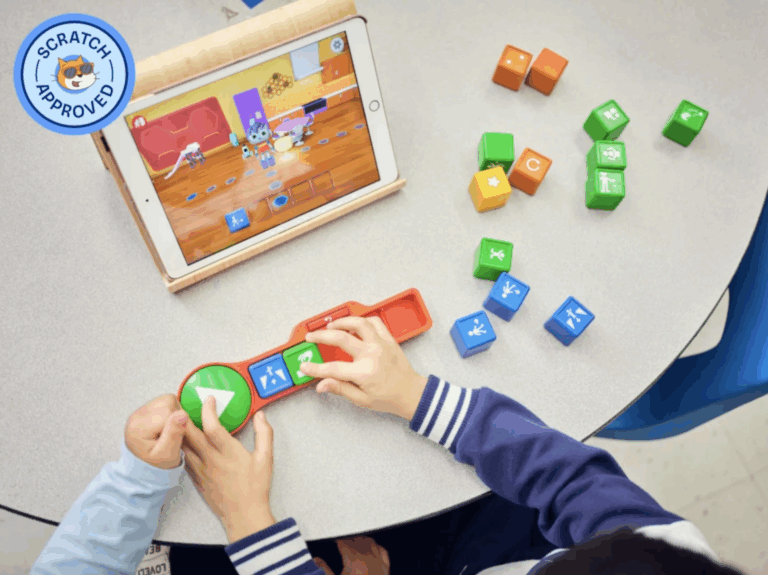
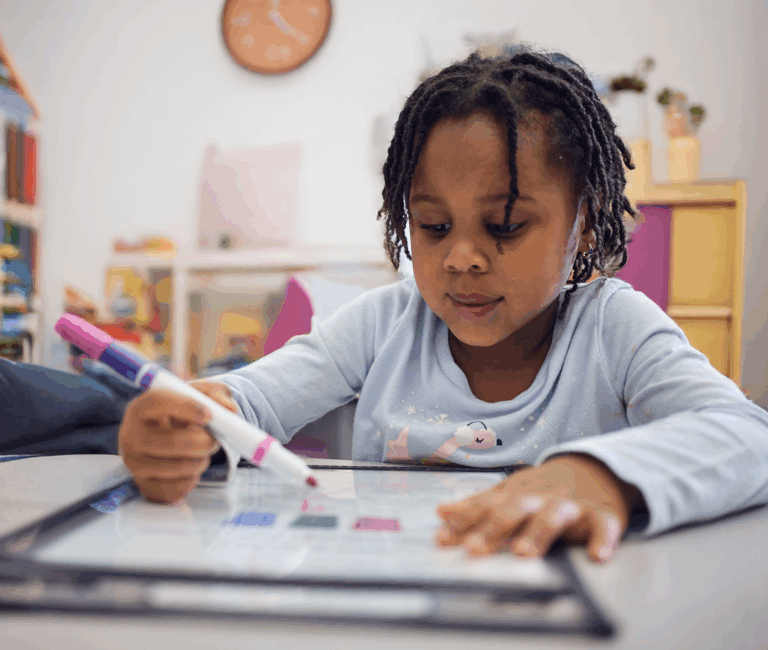
Codie Blocks is a learning tool that brings the foundations of coding to children ages 3 to 7. Through a unique storytelling component with hands-on, block-based coding, Codie Blocks makes complex concepts approachable, fun, and developmentally appropriate.
Caroline Rosenbloom is a Curriculum/Brand Ambassador at Codie Blocks, as well as a successful Principal and Instructional Leader in Canada.
Listen to the full podcast episode on DailySTEM or read the transcript below.
Chris Woods
As educators and parents, we’re always looking for great new ideas and resources to help our kids learn new, important skills. And today’s guest is going to tell us about a product I saw recently. That’s one of the best I’ve seen in a long time.
00;00;13;25 – 00;00;33;11
VO
Welcome to the Stem Everyday podcast. Each episode features educators sharing their practical ideas. To put more science, technology, engineering, and math into every classroom, every day. For show notes and more information, visit dailystem.com. Here’s your host, Chris Woods.
00;00;33;14 – 00;00;58;07
Chris Woods
Well, educators, we’re always looking for great resources to use in our classrooms and even at home to get kids more excited, more engaged with Stem learning. Today, I’m really excited to chat with Caroline Rosenbloom. She is a principal, math consultant from Canada, but she works with Codie Blocks and codieblocks.com. I was walking through a conference and sometimes you see a product and you’re like, wow, okay, that’s really cool.
00;00;58;09 – 00;01;03;17
Chris Woods
I just had to stop and start chat with people and I get to talk with you today. Caroline, welcome to the show.
00;01;03;19 – 00;01;05;08
Caroline Rosenbloom
Thank you. Thank you for the invite.
00;01;05;15 – 00;01;28;21
Chris Woods
Yeah. And, you know, there’s so many resources out there. There’s so many products, so many things that that purport to say, yeah, this is going to help your kid learn this and learn that. But Codie Blocks. I was just so struck by it’s just so tangible a way of helping kids to learn about coding. And it’s even connected with a PBS show, which gets it even more exciting for kids.
00;01;28;24 – 00;01;52;05
Caroline Rosenbloom
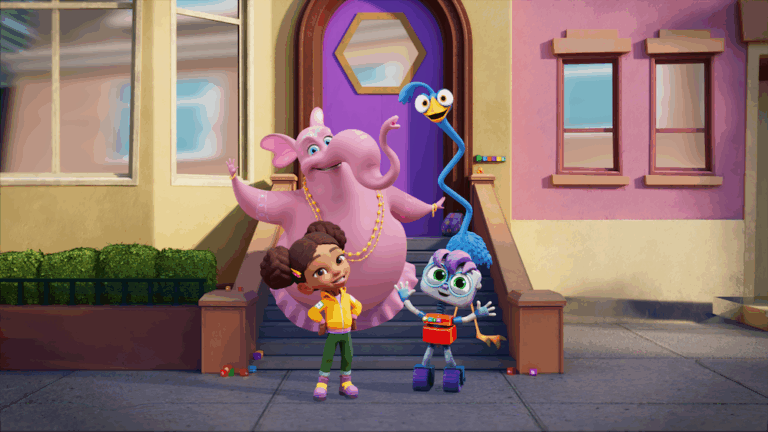
Yeah, and that’s actually how I started. And, you know, being in education, you get to see a lot of different things. And, I connected with Don Moody, who’s the creator of the Mia and Codie show, and I worked as an educational consultant on it, and I just thought it was such an amazing opportunity for young kids to watch on TV on PBS.
00;01;52;08 – 00;02;16;05
Caroline Rosenbloom
This amazing show on coding. And it’s amazing storytelling. It’s fun. You can see Mia, thinking and problem solving and, helping Codie and friends. And, there’s really a big focus on social emotional learning as well as coding. So it’s a whole package. And kids love it.
00;02;16;12 – 00;02;36;19
Chris Woods
And I’ll say this honestly, Caroline, I hadn’t watched, you know, a lot of PBS lately because my kids are all grown up, but but I’m walking by and I see this this, you know, this show, this animation, and it’s like, wow, that’s great. And and wow, it’s connected to coding. And and then there’s this, there’s almost this dock with these little blocks that the kids kind of put the blocks in this order.
00;02;36;19 – 00;02;53;03
Chris Woods
And it does something and then rearrange the blocks and it does something else. And, and there’s such a need for getting some of these skills to be hands on, to be tangible. And you know, what was kind of the thought process as Codie Blocks was thinking, let’s try to make this more tangible for kids.
00;02;53;05 – 00;03;13;22
Caroline Rosenbloom
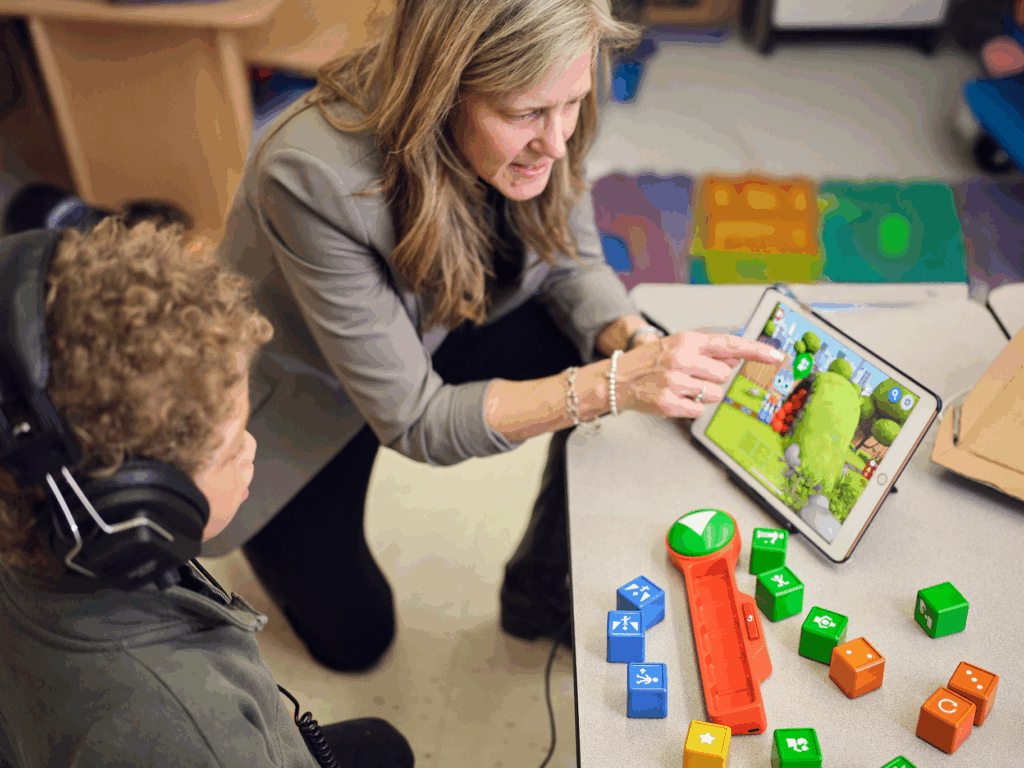
Yeah, I think one, to make it fun and engaging for kids and kids are used to playing with blocks, which is what I loved when I first saw the TV show and I knew that they were creating, the dock with the blocks. And, we had done a lot of field testing, on the app, with the blocks and without the blocks.
00;03;13;22 – 00;03;39;04
Caroline Rosenbloom
And the young kids, particularly preschool to grade two, really love that hands on tangible piece. And it’s that critical thinking, that computational thinking that, you know, automatic debugging, they’re debugging when they see a sequence and they think, you know, there’s something, there’s something wrong. And Mia actually goes through and, and suggests, you know, what kind of block should we use?
00;03;39;06 – 00;03;54;05
Caroline Rosenbloom
And they learn simple terms like like loop and repeat. And what does a number block do. And the arrows. So it really introduces them to those fundamental basics of of coding.
00;03;54;09 – 00;04;14;17
Chris Woods
Yeah. And Caroline and I know on the website codieblocks.com. I know there’s, you know, tons of different lessons and some of them are, you know, focused on bugs, focus on algorithms and repeat and loop and all those skills that, you know, are going to build into more and more higher level thinking of coding and computer science and computational thinking.
00;04;14;23 – 00;04;35;02
Chris Woods
But again, it makes it practical. It makes it relevant and especially, connecting in that show. And really these this is ideal something if you, if you’re teaching kids that are, you know, that 3 to 7 year old range especially, you know if you’re a family at home and you’re like, man, I’d love to do something fun with the kids, but educational, you know, this is another one of those things.
00;04;35;02 – 00;04;36;25
Chris Woods
You know, you can watch your show together.
00;04;36;27 – 00;05;10;15
Caroline Rosenbloom
Yeah. And I mean, it’s it’s really about problem solving. And, you know, I think sometimes we forget coding really does enter a lot of areas in education when we’re looking at, doing sequences, which is really a big part of what the kids are doing when they’re putting the blocks in order for Codie to do something, you know, they’re giving Codie instructions and they, you know, realize when the instructions aren’t correct, Codie doesn’t know how to do it so it, you know, won’t be successful.
00;05;10;15 – 00;05;34;21
Caroline Rosenbloom
So they have to debug it and figure it out. And, you know, they work together. So they learn to collaborate together on how to solve these things. And you know, in literacy, it’s it’s the same as procedural writing. So there’s, you know, direct connections to that. And, you know, a lot of the math processes as well that NCTM really highlights, National Council of Teachers of Mathematics.
00;05;34;23 – 00;05;58;02
Caroline Rosenbloom
And those math processes are really those higher level skills. And that’s what they’re doing. Like, sometimes we think, you know, kids who are three, 4 or 5 years old may not understand. But, you know, I have to tell you, sometimes they’re like the best problem solvers because, you know, everything’s so new to them. And, so at least this gives them an opportunity to really practice those things.
00;05;58;04 – 00;05;58;12
Caroline Rosenbloom
Yeah.
00;05;58;12 – 00;06;18;13
Chris Woods
Those kids, they think outside the box. They. Yes. They’re like they’re not constrained by all those rigid forms that us adults have have come into creating over years and years. Those neurons, those pathways in our brains. And, and they’re just very elastic brain. They’re, they’re ready to try something new. And, and they don’t see things as just it’s got to always go here and then it’s going to go wrong.
00;06;18;13 – 00;06;34;16
Chris Woods
So yeah, I, I love that. And, and I know if a teacher’s thinking, hey, Chris, I know it comes with a cost. You know, this is really reasonably priced. I mean, I’m not big on having to spend lots of money for a lot of materials and resources. You can only use some of the time, but it’s reasonably priced.
00;06;34;16 – 00;06;41;08
Chris Woods
And and Caroline, there’s a lot of stuff you can try right away on the website just for free to see what it’s like and see if it’s going to work with your kids.
00;06;41;11 – 00;07;09;25
Caroline Rosenbloom
Yeah. It’s so we have a whole Codie Blocks Universe. And it’s really a true unique learning system. You know, we have first the, the TV show. So all the episodes are on there through storytelling. It’s fun, it has relatable characters. And then we also have the app, where kids can practice the skills. So, they watch the TV show with their teachers and the teachers can.
00;07;10;01 – 00;07;40;21
Caroline Rosenbloom
It really is an easy entry point for for teachers who maybe aren’t as comfortable or familiar with technology. Yeah, and if they’re watching it with their kids, then they’ll pick up all the lingo and the processes and, there are lots of teaching, moments. And then the kids, can download the app on various devices. And then we also have the blocks and the dock where they can actually manipulate the app using the blocks.
00;07;40;21 – 00;08;04;26
Caroline Rosenbloom
And the kids can do exactly what Mia does on the TV show, and have Codie go through all these different missions on the app. And then the other piece we have, that’s part of the website is the lessons. And the lessons are really great for the teachers. And there’s kind of, three parts to it. There’s the video and discussion.
00;08;04;26 – 00;08;27;18
Caroline Rosenbloom
So we have stopping points, where teachers can stop the video at certain sections and ask questions. And questions could be related to maybe science, or it could be a coding question, or it could be a social emotional learning question. But we have some guided questions that teachers can look at and some stopping points if they would like.
00;08;27;20 – 00;08;54;18
Caroline Rosenbloom
And then we also have solutions and suggestions for the app. So for each of the, lessons, there might be some missions that are attached to that lesson right. And then we also have unplugged activities. So the unplugged activities can be used in a lot of different ways. Teachers can, use it as learning centers. They can send some of the unplugged activities home.
00;08;54;20 – 00;09;15;25
Caroline Rosenbloom
And one of my favorites is to take what we normally have on a piece of paper and make it life size. So if they have an activity where Codie has to go around and pick up, a can and he’s going to put it in the recycling bin, we can do that with a large grid in the gym or in the library.
00;09;15;28 – 00;09;23;21
Caroline Rosenbloom
And kids could be Codie, and everyone else can be, you know, Codie’s friends and help him complete his task.
00;09;23;21 – 00;09;46;25
Chris Woods
Yeah. That’s awesome. And all those different types of entry points allow for, you know, a teacher that’s that’s more confident using different types of, of situations. And then other teachers that are like, hey, I just want to give them another opportunity to try something with coding. I want to just download that app and to their, their devices and, and then just be able to, to use it, have the kids work through a lesson.
00;09;46;25 – 00;10;02;11
Chris Woods
And like you said, to be able to pause it, stop, talk through things and and of course, you know, kids are going to try more and more things. They’re going to figure so many things out faster than, than us teachers. And I think too, Caroline, something you brought up, sending some of those things home to for parents to do.
00;10;02;11 – 00;10;09;17
Chris Woods
And parents could again download that same app as well. And those kids could be doing those same things that they’re doing in their classroom.
00;10;09;19 – 00;10;33;15
Caroline Rosenbloom
Yeah, absolutely. And and, you know, we’ve related a lot of the activities to, to things that kids do, like routine things that they do at that age. So, you know, washing your hands. What are the what is the sequence of how to wash your hands or to get dressed for, for bedtime or for, outdoor play or, you know, what is a sequence that you have to do when you’re brushing your teeth?
00;10;33;15 – 00;10;47;01
Caroline Rosenbloom
So these are some of the things that we try to make it real for kids that age. And it’s familiar when they’re using the Codie Blocks. It’s the same kind of thinking that they’re doing as well.
00;10;47;04 – 00;11;08;11
Chris Woods
Yeah. When I was at the conference and I saw them, I got to try putting the blocks in the right order, and it was pretty easy. You kind of figure out and and that that quick entry point, you know, and then you push the button and see the characters go through that. And I think it was as simple as, like going and picking up a basketball and, and shooting it and then going to the next basket and shooting it, you know.
00;11;08;11 – 00;11;26;12
Chris Woods
So there was a loop process in there. Yeah. Just, just those simple little things there, those everyday situations for a kid. That’s why I wanted to have you on from from Codie Blocks and, and just let more educators know, because we’re always looking for those great resources we’ve got so few dollars to spend, and we want to spend them as wisely as possible.
00;11;26;18 – 00;11;36;03
Chris Woods
And, that’s why I love it. I just want to encourage educators at least check it out. Codieblocks.com. And again, you could sign up for free if that’s if I’m a teacher. That’s kind of what I do right.
00;11;36;05 – 00;12;02;16
Caroline Rosenbloom
Yeah. And and I think what I love about it is that, you know, as we mentioned, like there there are multiple entry points for teachers. So if a teacher is not as comfortable first, but loves using media literacy, can can co-teach with their Stem teacher, in the school and they can, you know, work on and introduce the kids to the TV show.
00;12;02;18 – 00;12;25;23
Caroline Rosenbloom
And then the Stem teacher can also continue it, you know, in the Stem class. So there’s lots of ways to be able to collaborate. And, you know, teachers can learn alongside, with the kids. Yeah. And, that’s the best part. I mean, like, you know, we never, you know, can underestimate kids. And, we always learn things, you know, based on their own learning.
00;12;25;23 – 00;12;26;23
Caroline Rosenbloom
So it’s fun.
00;12;26;27 – 00;12;43;10
Chris Woods
Just the other day, Caroline, I was, I was I learned something brand new, you know, with the kids in my classroom in high school level. And I was like, all right, I’m. I’m so excited I learned something. The kids are all like, what? Yeah, we’re still learning things too, as adults. So, Yeah. Caroline, really great chat with you today.
00;12;43;13 – 00;12;46;05
Chris Woods
You know, check out Codieblocks.com, but anything else?
00;12;46;07 – 00;13;11;01
Caroline Rosenbloom
Yeah, I would say check it out. You know, there’s lots of really great resources that you can try. And, if you want any more information, there’s an email there on the site. And, just send an email with all your questions and someone will get back to you. And yeah, we look forward to I just, you know, more kids trying these and and teachers like it just makes my heart grow.
00;13;11;01 – 00;13;15;18
Caroline Rosenbloom
So I just love seeing when kids are very excited about these kinds of things. So yeah.
00;13;15;19 – 00;13;30;28
Chris Woods
And you as a principal, I mean, you understand you want kids to get engaged with their learning. You see those kids in those classrooms. You want them to be able to get excited and about their learning. So really appreciate it. Caroline Rosenbloom for joining us today. And all the best to you and the Codie Blocks team.
00;13;31;01 – 00;13;32;11
Caroline Rosenbloom
Thank you very much.
00;13;32;13 – 00;13;51;02
Chris Woods
Again. Check out Codieblocks.com. Again. Subscribe to Stem Everyday podcast. You can hear about more great ideas, resources, things that educators are doing. And if you need to catch me head to dailystem.com. I’m always happy to help. And until next time again, just keep on making that learning tangible exciting to help them have those great opportunities in the future.